ECHO-Core
Intelligence that carries its experience forward.
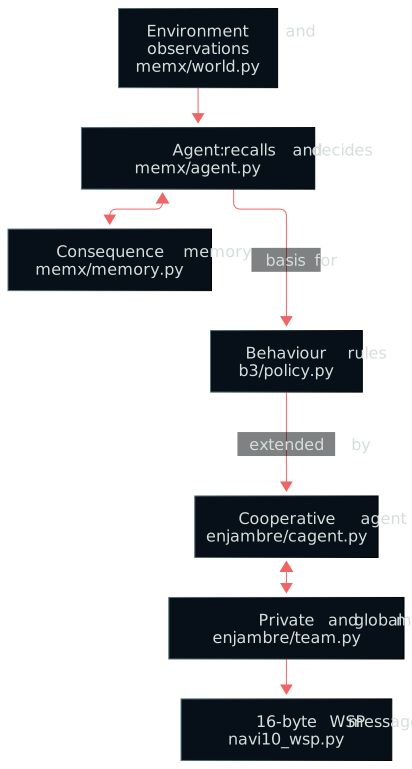
ECHO-Core brings together echoai’s development through its 5.9 research line, focused on autonomous robotics and CPU-based intelligence. Its core preserves experience, recalls consequences and uses shared memory to help agents cooperate.
WSP represents evidence in 16-byte packets. Memory distinguishes direct observations from reports by other agents. The core can operate without a language model: experience remains useful even without a GPU.
Code structure
Learn in one world, use it in another
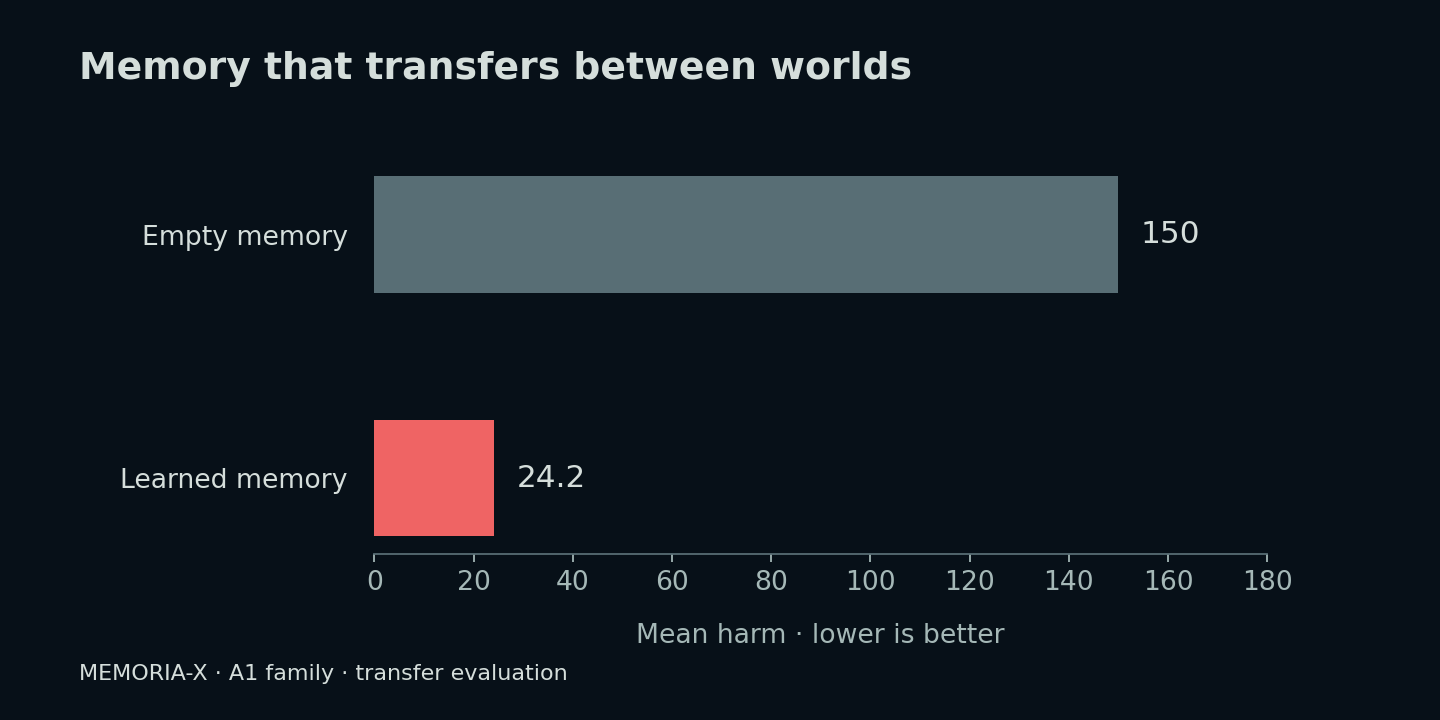
MEMORIA-X transfers memory of consequences to new environment families. In the A1 evaluation family, mean harm falls from 150.0 with empty memory to 24.2 with learned memory.
Improve round after round
ACUMULA-3 selects and combines available modifications based on measured failures. Across five rounds, the mean falls from 94.3 to 13.8 failed episodes out of 120: five consecutive improvements.
Solve tasks together
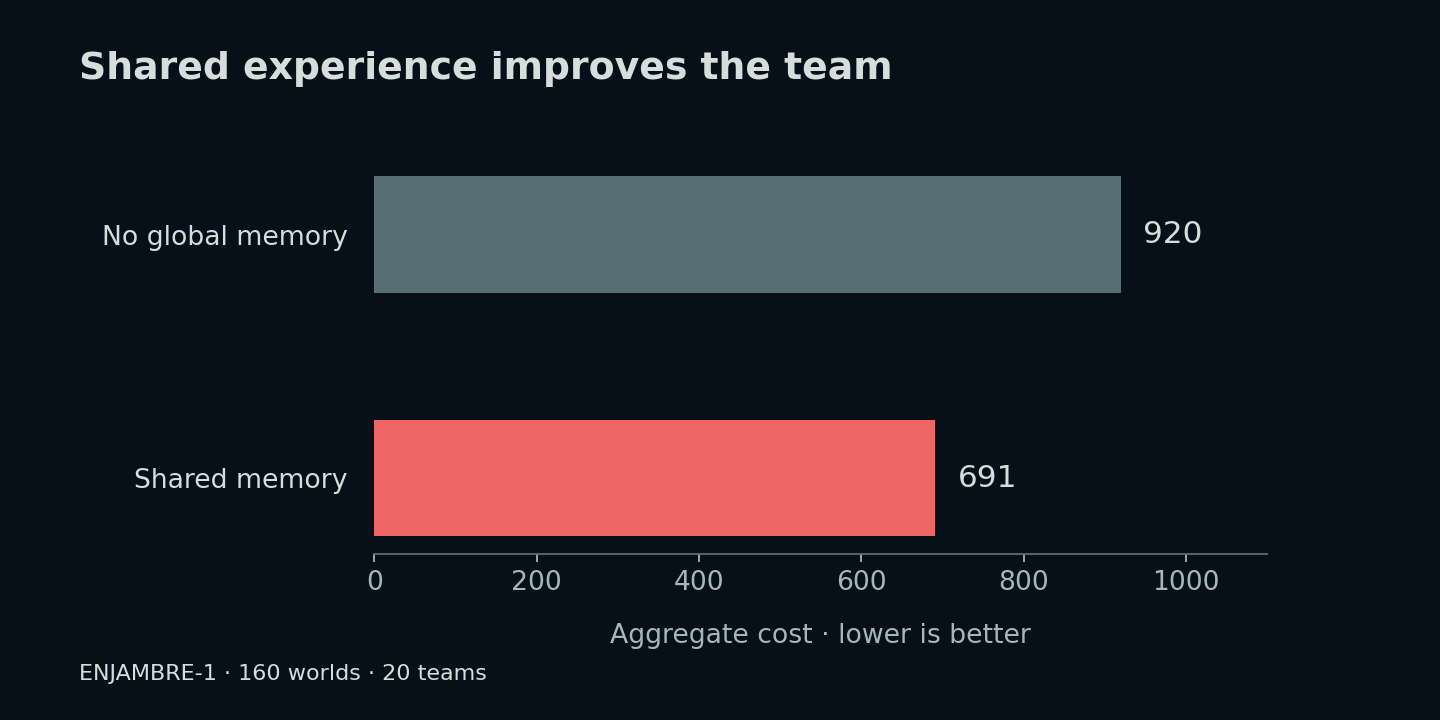
ENJAMBRE-1 connects four agents with private and shared global memory. The team solves all 160 evaluation worlds in 532 episodes; a single agent solves 119 in 1,471 episodes.
Results from MEMORIA-X, ACUMULA-3 and ENJAMBRE-1, validated in ECHO-5.8 and carried forward in echoai’s development towards ECHO-Core. These evaluations use simulated environments.